Wednesday, 30 September 2015

Fantasy FATE, Pathfinder dieties conversion

Pathfinder Dieties


Abadar
High-Concept: The Light of Civilisation
Aspect: Wealth and Merchants
Trouble: 'The law must be even-handed'
Alignment: Lawful Neutral

Asmodeus
High-Concept: Prince of Darkness
Aspect: Fire And Damnation
Trouble: 'A contract is a contract'
Alignment: Lawful Evil

Calistria
High-Concept: Beautiful Seductress
Aspect: Trickster
Trouble: Spiteful Vengeance
Alignment: Chaotic Neutral

Cayden Cailean
High-Concept: Lucky Drunk
Aspect: Carefree Adventurer
Trouble: Unassuming
Alignment: Chaotic Good

Desna
High-Concept: Explorer
Aspect: Freedom to Roam
Trouble: Vagabond Priests
Alignment: Chaotic Good

Erastil
High-Concept: Hunter
Aspect: Farming
Trouble: 'Keep the old ways'
Alignment: Lawful Good

Gorum
High-Concept: Battle
Aspect: 'He is present in all forged weapons'
Trouble: 'Conflict for conflict's sake'
Alignment: Chaotic Neutral

Gozreh
High-Concept: Nature in all its forms
Aspect: 'Ocean's fury and the wind's wrath'
Trouble: Fickle Favour
Alignment: True Neutral

Iomedae
High-Concept: Holy Knight
Aspect: 'Truth, Valor and Justice'
Trouble: Always Be Honorable
Alignment: Lawful Good

Irori
High-Concept: Ascetic Perfection
Aspect: Self-improvement
Trouble: Indifferent to material struggle
Alignment: Lawful Neutral

Lamashtu
High-Concept: Mother of Monsters
Aspect: Demon Queen
Trouble: Hates all other gods
Alignment: Chaotic Evil

Nethys
High-Concept: All-Seeing
Aspect: Magic Above Morality
Trouble: Shattered Mind
Alignment: True Neutral

Norgorber
High-Concept: Patron of Assassins
Aspect: Keeper of Secrets
Trouble: 'Wheels within wheels' (Double-Triple-Quadruple Cross)
Alignment: Neutral Evil

Pharasma
High-Concept: Shepherd of Departed Souls
Aspect: Abhors Undead
Trouble: Cold and Uncaring
Alignment: True Neutral

Rovagug
High-Concept: The Destroyer
Aspect: Ancient Beyond Knowledge
Trouble: Enemy of the Gods
Alignment: Chaotic Evil

Sarenrae
High-Concept: Healing Light
Aspect: Raging Flames of the Sun
Trouble: 'Kill only the remorseless'
Alignment: Neutral Good

Shelyn
High-Concept: Love
Aspect: Beauty, Art and Music
Trouble: Pacifist
Alignment: Neutral Good

Torag
High-Concept: Forge Master
Aspect: Consumate Planner
Trouble: Forgiveness is Folly
Alignment: Lawful Good

Urgathoa
High-Concept: Disease
Aspect: Patron of Necromancers
Trouble: Gluttony, Vice and Excess
Alignment: Neutral Evil

Zon-Kuthon
High-Concept: God of Pain
Aspect: Envy and Loss
Trouble: Gruesome Self-mortification
Alignment: Lawful Evil

---

EDIT(02/10/2015@00:47): Added ceremony and votive uses of Prayer to the overcome action for that skill.

EDIT(15/11/2015@15:20): Removed rules for Prayer extra.

Monday, 28 September 2015

Fantasy FATE, Generic and Custom Fantasy Races

Character's may optionally choose to belong to a fantasy race. Normally, each such race is described by two aspects: High-concept (or 'hat') and Trouble. The High-concept and Trouble functions identically to that of a character.

Optionally, a more involved race can receive an additional Aspect in exchange for an additional Trouble.
Elf

Example Races

Human
High-concept: Human
Trouble: Human

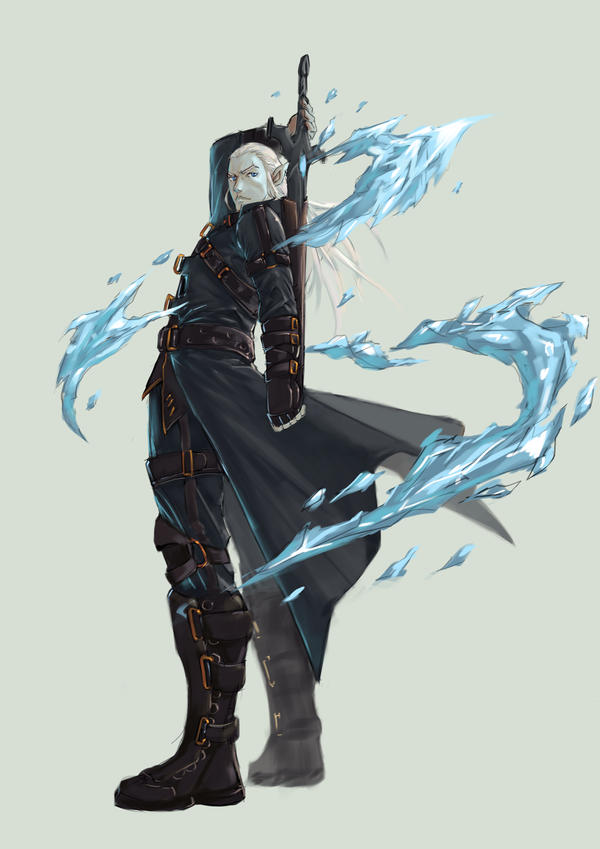
Elf
High-concept: Immortal
Aspect: Naturally Magic*
Trouble: Haughty
Trouble: Vulnerability to Alchemical Cold Iron

Half-Elf
High-concept: Natural diplomats
Trouble: Caught between two cultures

Dwarf
High-concept: Resistant to Magic
Trouble: Never Forgets a Grudge

Half-golem
Orc (and Half-Orc)
High-concept: Brutal Fighter
Trouble: Uncouth Thug

Half-Troll
High-concept: Regenerating
Aspect: Strong
Trouble: Huge
Trouble: Slow-witted

Goblin
High-concept: Cunning Survivor
Trouble: Small

Drow
High-concept: Scheming Poisoner
Aspect: Underground Adaptation
Trouble: Daylight Blindness
Trouble: Vulnerability to Alchemical Cold Iron

Half-Golem
High-concept: Mechanically augmented body
Awakened Construct
Trouble: Abominable

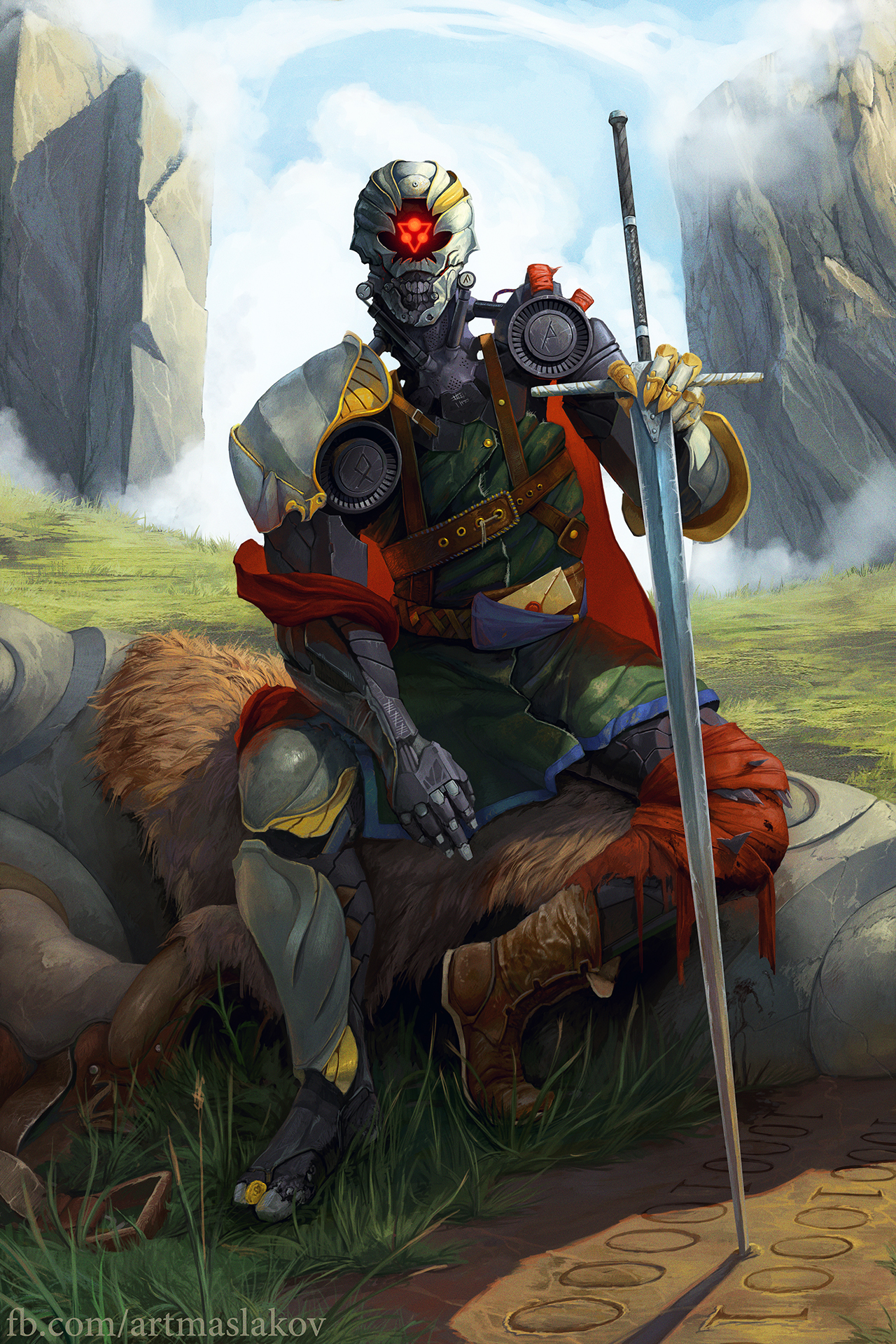
Awakened Construct
High-concept: Machine
Aspect: 'Harder, Better, Faster, Stronger'
Trouble: Built for one purpose
Trouble: Property of... ('If found please return to...')

Undine
High-concept: Amphibious
Trouble: Hydration Loss

Fiendish
High-concept: Devil/Demon-spawn
Aspect: Unholy Magic*
Trouble: Fiendish-appearance
Trouble: Vulnerability to the Sanctified

NB: * indicates this Aspect grants permission for the Wizardly Magic extra.
Fiendish

---

EDIT(29/09/2015@01:24): Added Fiendish. Clarified that certain aspects grant Permissions for the Wizardly Magic Extra.

EDIT(29/09/2015@01:58): Added 'mood-board' images for the more unusual races.

EDIT(29/09/2015@02:37): Gave Trolls a second Aspect and Trouble.

Tuesday, 13 January 2015

Drow Noir FATE, conversions and equipment...

As a test game for the FATE system I am reexamining my Drow Noir setting.

The setting seems solid-enuogh, however the FATE Core rules can be a little... contradictory on the matter of equipment so I'm going to try the following rules to convert over the magic and mundane items of Drow Noir.

Gear and Stuff

General Gear

As a rule, characters may have whatever unremarkable gear they want, marking it on their sheet. Such gear does not provide any distinguishable plus or minus, and characters are assumed to start with whatever gear is needed for the performance of the skills on their sheet automatically. However such gear can be lost or awarded freely by the GM.

At the GM's discretion, unwieldy items may be invoked against the character, with 1 free invocation per scene.

Weapons

Characters entering a conflict with bigger, or superior, weapons - as determined by GM fiat - will receive the Superior Weaponry scene aspect with one free invocation. They may spend Fate Points to invoke it multiple times.

Otherwise, mundane weaponry is treated as generic gear - with no discernible affect on the rules except to facilitate skill checks.

Heavy Armour

A character may start with Heavy Armour, such armour provides a 1-shift Armour bonus against physical attacks (reducing any such attack by 1, cancelling it out entirely at shift-0). However like any mundane gear the Heavy Armour aspect can be invoked against the character for free once per scene.

As Heavy Armour is mundane gear it can be given to a character during character creation at no cost.

Ordinarily, 'light' armour is indistinguishable from no-armour unless it is Exceptional Armour

Exceptional Weaponry

Characters may have the option to acquire Exeptional Weapons, which provide a shift-1 bonus on the character's attacks with them.

Exceptional Armour

Characters may have the option to acquire Exceptional Armour, which provides a 1-shift armour bonus without imposing the Heavy Armour aspect.

It is also possible to acquire Exceptional Heavy Armour, which provides a 2-shift armour bonus - making the character extremely tough. Such armour has all the penalties of Heavy Armour however.

Exceptional Tools

Characters may have the option to acquire Exceptional Tools, which provide a 1-shift bonus to any one skill when using it. For example Exceptional Lockpicks would augment a character's Burglary skill.


Magic Arms, Armour and Wonderous Items

If item of Weaponry or Armour is described as magic it will also count as Exceptional in addition to an Aspect used to describe its enchantment.

Consumable Magic Items

Consumable items are single-use, granting the effects of an aspect (usually with a free invocation) or a stunt for the duration of a scene. These represent the potions, poisons and grenade-like magical gadgets characters can acquire and use.

Acquiring Exceptional and Magic Items

When using the Wealth rules from page 285 characters may begin play with a number of  Exceptional or Magic items by pre-filling their Wealth Stress and Consequence boxes. Wealth Stress does not necessarily clear immediately after a combat: in this context the character's investments must have time to produce dividends - typically when a month's time passes.

Consumable Item (2 uses) - 1 shift
Exceptional Item - 1 shift
Lesser Magic Item (one Aspect) - 3 shift
Greater Magic Item (two Aspects) - 4 shift

During play these shift levels can also be used as rules of thumb for the difficulty of acquiring an item.

Example Items

Powered Armour (lesser magical armour - shift 3)
Functions as Exceptional Heavy Armour (2 shift armour bonus; Heavy Armour aspect) but can be tagged as an aspect to enhance the character's strength.

Cloak of Protection (lesser magical armour - shift 3)
Functions as Exceptional Armour (1 shift armour bonus) and can be tagged to enhance the character's physical defences.

Ring of the Darkhidden (lesser magic item - shift 3)
Makes the wearer invisible in darkness. Can be tagged to enhance the character's stealth.

Plate Armour (mundane armour - free)
Functions as Heavy Armour (1 shift armour bonus; Heavy Armour aspect).

Potion of Healing (consumable magic item - shift 1 for two)
Can be drunk to immediately recover 1 box of physical stress.

Potion of Rage (consumable magic item - shift 1 for two)
Can be drunk, awarding the character the Beserker Strength aspect with 1 free invocation, for the remainder of that scene. The character may spend boxes of physical stress as well as Fate Points to tag this aspect.

Necklace of Fireballs (consumable magic item - shift 1 for two uses)
When used provides the character with the use of a thrown magic weapon (counts as an Exceptional Weapon). The Fireballs can be tagged, like any other magic weapon and come with 1 free invocation.

Drow Poison (consumable magic item - shift 1 for two doses)
When used to coat a weapon or mundane ammunition it provides, for the remainder of the scene, a stunt that inflicts the Drowsiness boost on any enemy that takes damage from a physical attack with that weapon.

Bolts of Web (consumable magic item - shift 1 for two quivers)
When used, for the remainder of the scene successful attacks with that weapon automatically inflict the Entangled boost on any enemy that takes damage from them.

Psi

Some creatures in the underdark are natural psi users. While extremely rare it does happen that a Drow has a natural talent with Psi, although there are no institutions set up to train them in its use.

Permissions: A race aspect for a psychic race, or another aspect representing how they acquired those abilities or some hardship suffered as a consequence.
Costs: Skills (Psi), Stunts for additional abilities.

Attack: The psychic can mentally assault any creature, inflicting mental stress. This can be resisted with Will, Magic or Psi. You may read the mind of any creature Taken Out using this attack.

Defend: Defend against psychic or other supernatural attacks.

Psi Stunts

Telekinesis: Can manipulate objects at a distance using Psi to restrict any of your other skills. Additionally you may make physical attacks with Psi.
Levitation: Can use Psi to levitate yourself into the air, effectively flying.
Empathic: Can use Psi in place of Empathy to read a person's emotional state and defend against Deceive actions.

---

EDIT(29/09/2015@00:12): Changed rules for starting with magic items to use Wealth stress track.

EDIT(29/09/2015@01:27): Removed the ability to change Spells using an arcane library - now can only be done when stunts are normally changed.

EDIT(15/11/2015@15:21): Removed rules for Wizardly Magic.

Tuesday, 10 June 2014

The Abiologists of House Oussath

House Oussath

Matriarch: Riss'Umrae Oussath (Impossible-bloodline Sorcerer)

The court of house Oussath comprises a large number of Pseudologoi, male-advisers to the house. A fact which has attracted promising magicians and artisans from other houses as petitioners seeking an opportunity to research, unhindered by material wants. Only the Guild of Crows rivals their research output and no house matches the output of magic items, with many common items first being exclusive to the house's artisans.

Sunday, 8 June 2014

House Tortyl stock-NPCs and equipment

The druids and viziers of House Tortyl maintain several distilleries and bottling plants through the Pit. Deliveries of opium, grain and fungi are made around the clock where slaves and downtrodden workers produce laudanum or beer.

Saturday, 7 June 2014

Drow Game Rules and Setting so far...

So. It's been a while since I've posted... anything. And as a consequence all of the games I've previously written about have been replaced.

So I'm going to mirror all of the House-Rules stuff for my new Dungeonpunk Drow Game which I gave the elevator pitch: Dishonored with Drow.

This builds on all my existing Pathfinder House Rules, with some extras to account for the setting.

Tuesday, 26 November 2013

Nonlethal Damage and Wound Points

I've decided to update my tangled mess of house-rules with some more, recent, changes.

---

Nonlethal Damage and Wound Points

[Reminder: A character can elect to deal only nonlethal damage with a normally lethal weapon by taking a -4 penalty on their Attack Roll]

A character receiving nonlethal damage loses Vitality points as normal. The character can lose no more than a single Wound Point to the blow however. If they lose any Wound Points to nonlethal damage they must make a DC5+[Damage Received] Fort save or fall unconscious for d4 minutes (d4*10 rounds). This occurs in place of checks for Stunning. Nonlethal attacks reducing a creature to 0 Wounds may still cause a creature to begin dying.

---

NPCs and the Stun Threshold

Instead of rolling Fort saves everytime an NPC loses Wound Point they have a Stun Threshold equal to their Fort save modifier + 5. This is compared to the damage received. If the damage is greater than their Stun Threshold they are treated as though they failed their save vs Stunning and are stunned until the end of their next turn. This is identical to taking 10 on the Fort save, except reducing the amount of dice rolled.

Bludgeoning damage treats the threshold as 2 lower.

PCs should roll Fort saves as normal.

---

Duration Concentration 

Spells ordinarily (ie in the book) listed as having one of the following durations:
 * 1 round/level
 * 1 minute/level
 * 1 hour/level
May be extended by the spell's caster concentrating as a Standard Action that does not provoke an attack of oppportunity. Anything that could break your concentration when casting a spell can also break your concentration while you're maintaining one, and you cannot cast another spell while concentrating. The normal duration of the spell does not begin until your concentration is released or interrupted. Once a character has stopped concentrating (willingly or otherwise) they cannot recommence concentrating.

Properly, the new duration becomes Concentration + [old duration].

This has the effect of making certain rnd/level spells, like Summon Monster, actually useful at first level.

---

Edit (26th Nov 2013 @ 1855): Sleep no longer allows the depletion of Wound Points.

Edit (26th Nov 2013 @ 1907): Changed the damage of sleep to d6+1.

Edit (26th Nov 2013 @ 1943): Got rid of sleep change.